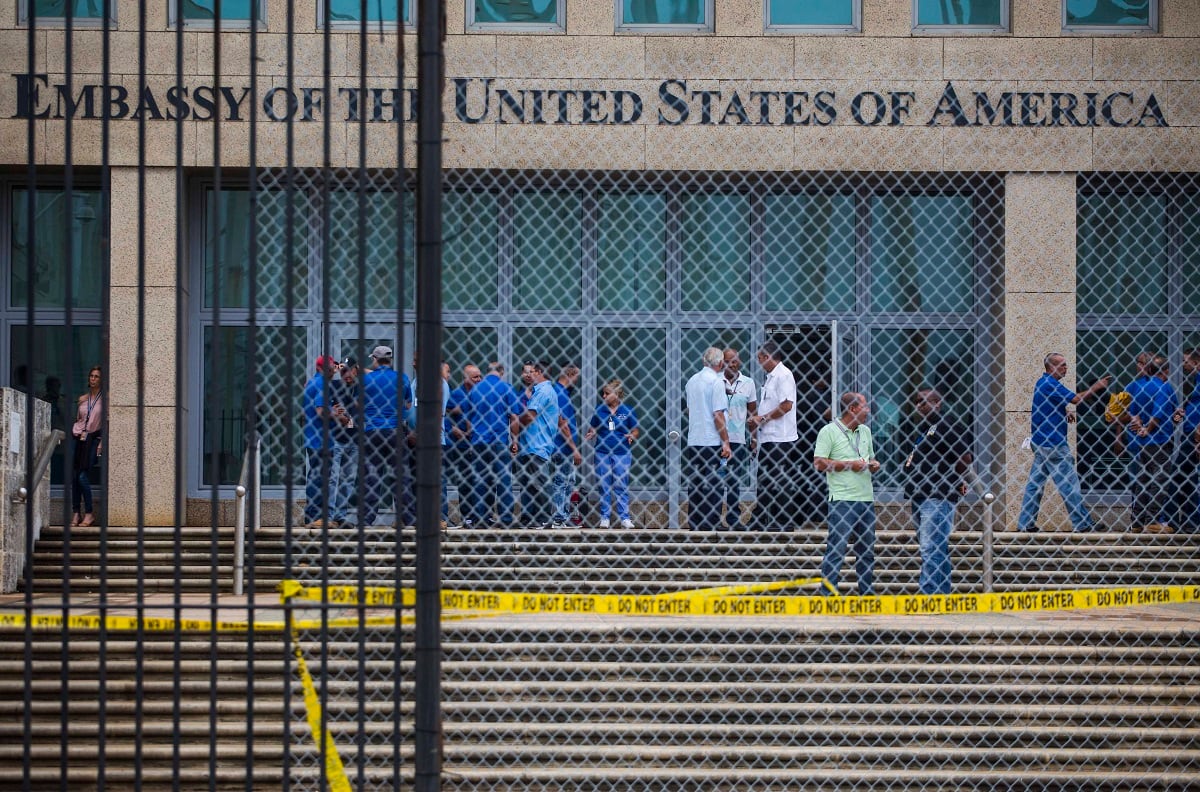
In November 2016 employees at the U.S. embassy in Havana, Cuba, began experiencing strange noises and inexplicable hearing, vision and brain symptoms.
But it took the State Department's Office of Management Policy, Rightsizing and Innovation nearly a year to become aware of the incident through media reports and to consider convening an accountability review board, according to a Government Accountability Office report released to the public Sept. 5.
This extended period of time to respond represented a weakness in internal agency communication, according to the report.
RELATED
“The offices in State weren’t communicating the way they should have. When these incidents were occurring, several State offices were responding, but the office responsible for initiating the process to consider whether or not to convene an accountability review board was not aware of the incidents,” said Brian Mazanec, acting director of international affairs and trade at GAO, in an agency podcast on the report.
“And that’s important because the accountability review board is the process which the State Department is legally required to convene, but it’s also the important process by which State Department learns valuable lessons to improve the safety of posts across the globe. In fact, the way that this office found out about the incidents was ultimately a former employee in that office who saw media reports of the incidents and called the office and notified them.”
According to Mazanec, the State Department has policies for how the Office of Management Policy, Rightsizing and Innovation would convene an accountability review board, but it does not have policies concerning how that office should be made aware of an incident.
RELATED
“As a result of the incidents in Cuba, M/PRI officials told us they realized that they may not be aware of all incidents that may involve injury to U.S. diplomats. In an initial attempt to address this concern, M/PRI officials said they requested that [Crisis Management and Strategy] add M/PRI officials to the distribution list for the Safety Overseas Summary to try to increase M/PRI’s awareness of potential incidents. CMS told us that it added M/PRI officials to the distribution list in October 2017,” the report said.
GAO ultimately recommended that the State Department should revise official policies to include communication procedures in the event of an incident that may involve injury, loss of life or destruction of property.
“We basically recommended that the State Department update its policies to address that gap that we found,” Mazanec said.
The State Department agreed with the recommendation.
Mazanec also confirmed that the State Department still does not know exactly what caused the strange health problems in Cuba, though the lead author of a report on the medical examinations of those affected, Douglas H. Smith, recently theorized that the attack could have been made with microwaves rather than sonic waves, according to the New York Times.
Jessie Bur covers federal IT and management.