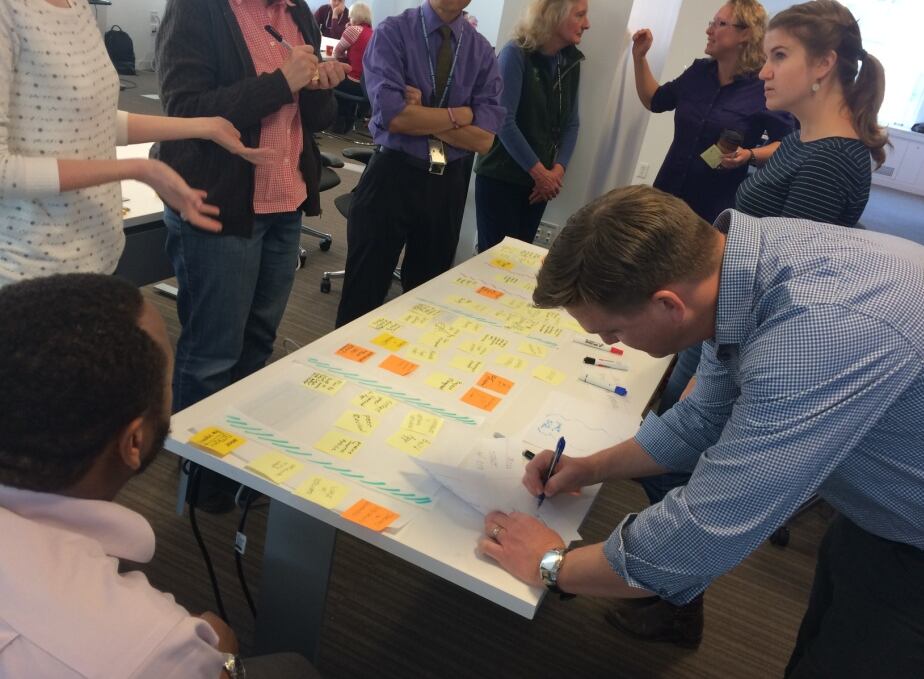
The Internet allows people to collaborate like never before and the federal government wants to take advantage of that engagement potential.
Of course, as with all government initiatives, a move toward using crowdsourcing and citizen science has to be done within a comprehensive policy framework.
In the memo, Holdren notes the economic benefits of citizen science and crowdsourcing, citing a University of Washington study stating that contributions from 1.3 million to 2.3 million volunteers resulted in some $2.5 billion in value annually.
"Citizen science and crowdsourcing projects can enhance scientific research and address societal needs while drawing on previously underutilized resources," Holdren wrote. "Other benefits include providing hands-on learning in science, technology, engineering and mathematics and connecting members of the public directly to federal agency missions and to each other."
The coordinator will work with OSTP, the Federal Community of Practice for Crowdsourcing and Citizen Science (CCS) and the General Services Administration, which is standing up a new public database of projects.
Agencies will have 180 days to start contributing to the GSA database, which will act as a central portal for citizens interested in getting involved.
OSTP and CCS will have metadata requirements for the database ready within 90 days, according to the memo.
- Develop clear agency-specific policies that include guidance on process and privacy;
- Allocate resources and staffing to foster projects;
- Develop software and mobile apps to support citizen science projects, particularly innovative, low-cost options;
- Maintain a diversity of projects to maximize potential value; and
- Conduct rigorous research and evaluations to ensure the agency is getting the most from these programs.
Aaron Boyd is an awarding-winning journalist currently serving as editor of Federal Times — a Washington, D.C. institution covering federal workforce and contracting for more than 50 years — and Fifth Domain — a news and information hub focused on cybersecurity and cyberwar from a civilian, military and international perspective.