A bipartisan pair of representatives are working together to create a national artificial intelligence strategy.
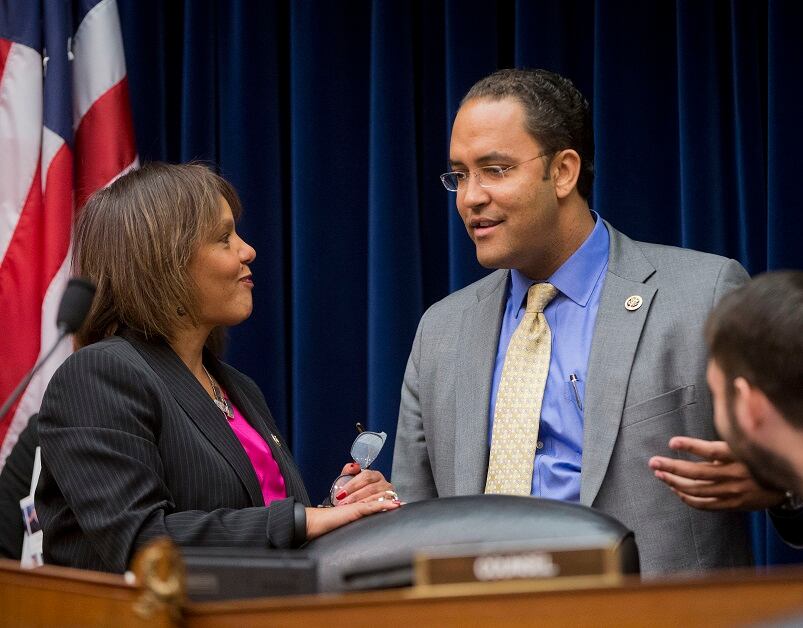
Reps. Robin Kelly, D-Ill., and Will Hurd, R-Texas, announced Oct. 24 a new initiative with the Bipartisan Policy Center to develop an AI strategy that will “guide how Congress and the executive branch tackle this critical issue.”
“If America loses its advantage in technology, it will have a devastating effect on our economy and national security. We need a national AI strategy to ensure the U.S. is prepared to lead on technology that will define the course of this century,” Hurd said in a statement.
According to the press release, Kelly and Hurd will work with center “over the coming months” and work with policy experts, leaders in the public and private sector, as well as consumer advocates to develop the strategy.
“One of the fastest and most disruptive technologies developing by leaps and bounds is artificial intelligence (AI)," Kelly said in a statement. “At present, we are woefully underprepared for this technological revolution. It is vital that our nation has a real, actionable AI Strategy that ensures long-term U.S. competitiveness and security.”
The two legislators, leaders on technology policy on Capitol Hill, asked for the Bipartisan Policy Committee’s help because of its “leadership in evidence-based policy-making and bipartisan collaboration” in problem-solving.
“Used wisely, artificial intelligence will enhance national security, strengthen our economy, and extend opportunities to millions of Americans who are on the sidelines of our modern economy," said Bipartisan Policy Center President Jason Grumet. “However, realizing the full potential of AI is not a foregone conclusion.”
Hurd and Kelly have a background of working together — working as chairman and ranking member, respectively, of the House Oversight Committee’s Information Technology Subcommittee from 2015 to 2019. In September 2018, they published a white paper on the impact of AI on government policy.
"With thoughtful effort, Congress can spur the development of AI while protecting individual privacy, avoiding bias, and promoting economic and social inclusion,” said Grumet.
Andrew Eversden covers all things defense technology for C4ISRNET. He previously reported on federal IT and cybersecurity for Federal Times and Fifth Domain, and worked as a congressional reporting fellow for the Texas Tribune. He was also a Washington intern for the Durango Herald. Andrew is a graduate of American University.