The U.S. intelligence community has confirmed, for the first time publicly, that the Russian government was behind recent high-profile hacks of the Democratic Party and other U.S. political figures.
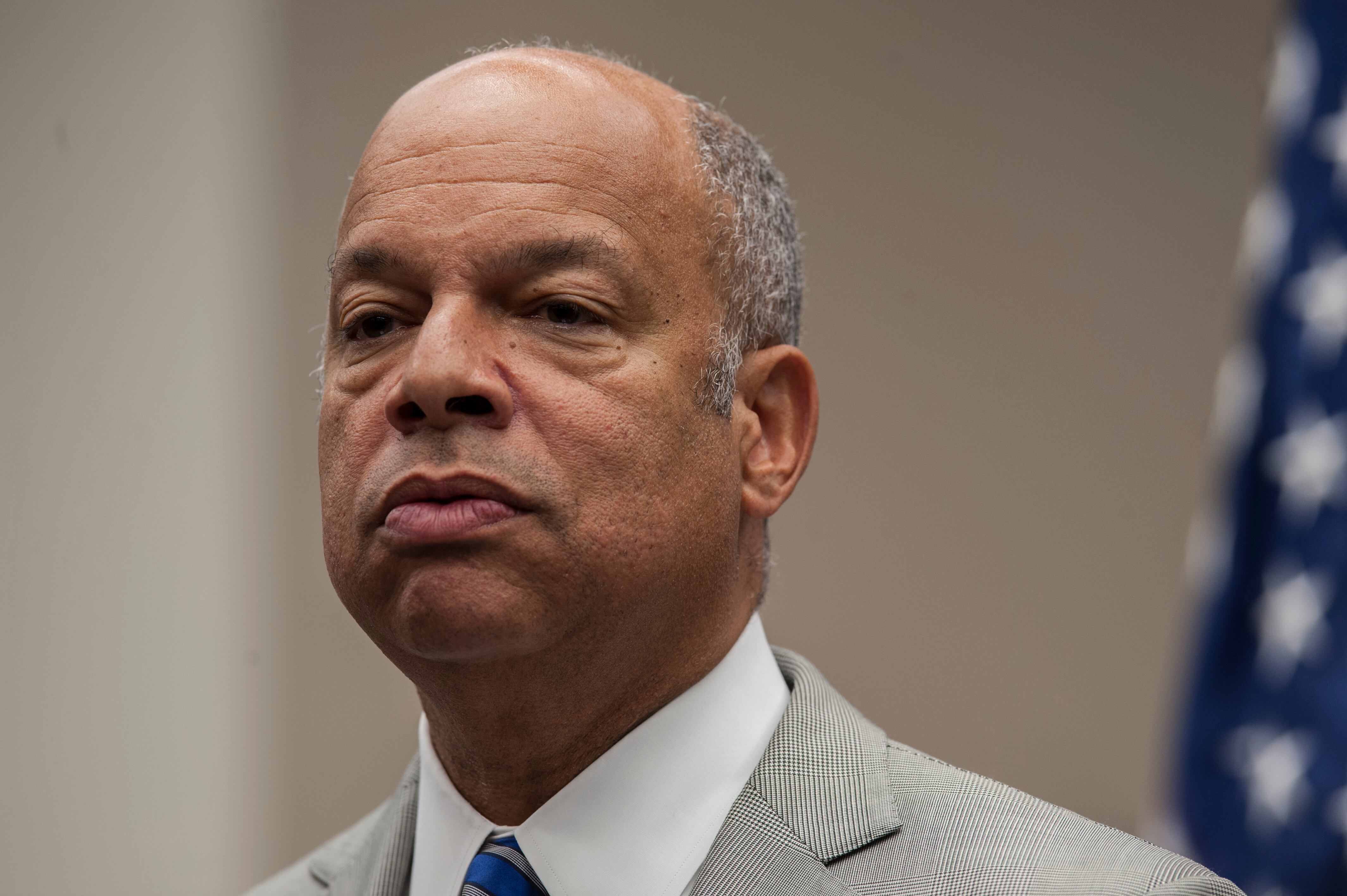
In a statement Friday afternoon, Department of Homeland Security Secretary Jeh Johnson said leaked emails posted on WikiLeaks and DCLeaks in recent months by the hacker going by the handle Guccifer 2.0 were in fact directed by the Russian government. Individuals purporting to be Guccifer 2.0 have given interviews in which they claimed to be from the Ukraine, though these claims were widely disputed.
"The recent disclosures of alleged hacked emails on sites like DCLeaks.com and WikiLeaks and by the Guccifer 2.0 online persona are consistent with the methods and motivations of Russian-directed efforts," Johnson said in a statement Friday afternoon, citing intel gathered by the U.S. intelligence community. "These thefts and disclosures are intended to interfere with the US election process."
At least two states — Arizona and Indiana — have also reported breaches of voter rolls, hacks that seem to point to Russia, as well. However, Johnson stopped short of accusing the Russian government of those hacks.
"Some states have also recently seen scanning and probing of their election-related systems, which in most cases originated from servers operated by a Russian company," he said. "However, we are not now in a position to attribute this activity to the Russian government."
Nation-state hacking has become a prime concernfor federal agencies. These kinds of intrusions and disclosures have the potential to influence political discourse and the election itself.
"Such activity is not new to Moscow," Johnson said. "The Russians have used similar tactics and techniques across Europe and Eurasia, for example, to influence public opinion there. We believe, based on the scope and sensitivity of these efforts, that only Russia's senior-most officials could have authorized these activities."
DHS has offered to help secure elections infrastructure for any states that ask. So far, 18 states have come forward to request assistance.
Aaron Boyd is an awarding-winning journalist currently serving as editor of Federal Times — a Washington, D.C. institution covering federal workforce and contracting for more than 50 years — and Fifth Domain — a news and information hub focused on cybersecurity and cyberwar from a civilian, military and international perspective.