Editor's Note: An earlier version of this story cited three sexual harassment cases as part of the June 1 report. The three cases are actually from an OIG Managament Advisory Memorandum issued on May 31.
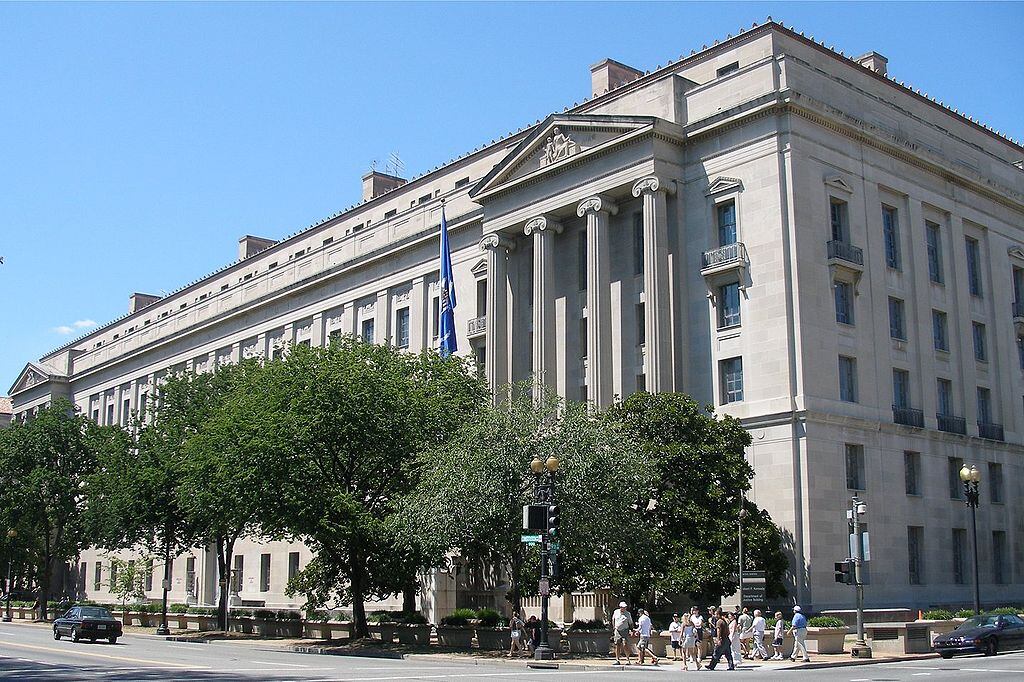
The Department of Justice's inspector general released an explosive new report on June 1 alleging that its Civil Division has systemic policy breakdowns for investigating sexual harassment allegations within the agency.
Related: Read the report
The report examines 11 sexual harassment claims made at DOJ from fiscal 2011 to the first half of fiscal 2016, finding that Civil Division officials often administered inconsistent punishments for substantiated allegations and had insufficient investigation and reporting polices for handing allegations.
The inspector general's report said that Civil Division's paper records system for preserving and tracking harassment case information was so flawed that investigators discovered two additional cases the agency's human resources department did not have on record. Additionally, the cases that were tracked depended solely on the recollection of an HR officer.
"In some of the cases we received, we were unable to reconstruct the facts, investigation or adjudication because the information contained in the case files was inadequate," the report said.
"Furthermore, [Office of Management Programs ]/HR staff could not articulate how the Civil Division would be able to manage its case file system in the absence of the HR Officer and her memory of events."
The OIG also noted that prior to the investigation, which began in 2015, Civil Division had failed to report any sexual harassment allegations to the inspector general’s office, as required by federal regulation — despite the fact that two allegations drew concerns about possible criminal charges.
The Civil Division also had no internal policies for managing allegations, referring instead to federal regulations and DOJ policy. Investigators said this allowed some cases to be handled by branch managers who never informed or consulted with HR staff.
Finally, a lack of penalty guidance within Civil Division reportedly allowed high-performing employees to be given lesser punishments for sexual harassment claims, according to the report, including some who received performance awards while under investigation.
"We determined that in general the penalties for substantiated allegations, including ones we found to be serious, were nothing more than written reprimands, title changes and reassignment for cases in which the subjects of the allegations were supervisory/senior attorneys," the report said. A Management Advisory Memorandum issued by the OIG on May 31 also cited three glaring cases of sexual harassment from a 2015 review of DOJ components, showing where enforcement efforts repeatedly failed, including:
- Two Bureau of Alcohol, Tobacco, Firearms and Explosives training instructors who had consensual sex with their students for over three years after being counseled for similar behavior.
- An FBI Supervisory Management and Program Analyst allegedly sexually harassing subordinates for three years, though the analyst was counseled four times for the behavior.
- A Civil Division attorney allegedly peeped on a woman nursing in a closed office after being counseled for sexually harassing female employees and interns. The attorney later received more counseling.
The OIG offered four recommendations, including:
- Creating a system to track all sexual harassment and misconduct allegations, including the minimal standards for case file content.
- Develop guidance for reporting harassment allegations to the OIG, agency leadership, and the Office of Management Program’s Human Resources.
- Develop defined penalty guidelines to be applied consistently to substantiated allegations.
- Craft guidance for handling performance awards given to employees under investigation for harassment or misconduct.
The Civil Division concurred with all four recommendations, and the OIG considers them resolved.