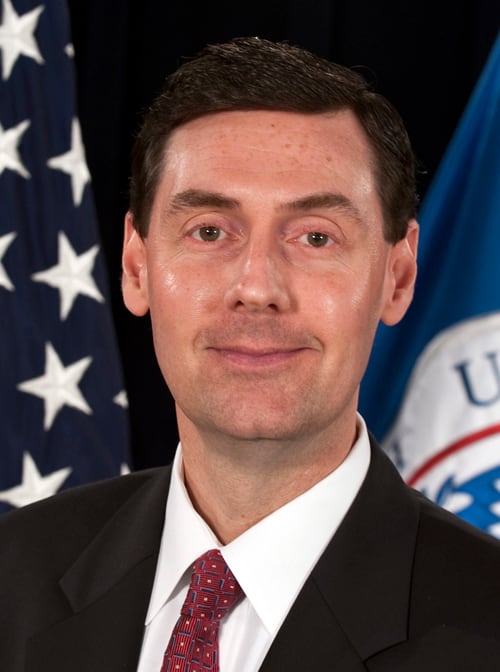
Chris Cummiskey is a former acting under secretary at the Department of Homeland Security and a senior fellow at the George Washington University, Center for Cyber and Homeland Security.
It has often been said that government is a reactive entity. Real change is slow to occur unless brought about by a major event or disaster. For example, the Department of Homeland Security, with its 22 components, 240,000 employees and $60 billion budget, would never have been pulled together by the Bush Administration and Congress without the tragedy of 9/11.
Last week, we were all reminded that it doesn't take much to shatter the illusion that even the most restricted air space in the country can be badly breached by a determined individual.
What does it say about the current state of security in the National Capital Region if a 61-year-old postal worker from Florida can fly 80 miles from Gettysburg, Pennsylvania, and land at the front door of Congress?
It is frightening to think of the destruction a determined adversary could deliver using the same kind of tactics.
While there has been much progress in hardening the defenses around Washington, D.C. in recent years, the emerging threat of ultra-light aircraft and drones poses new technological challenges for the patchwork of law enforcement, DoD and civilian agencies that all claim jurisdiction in the heart of the District.
In some respects, gyrocopter pilot Doug Hughes has done all of us a huge service. He inadvertently set off the alarms for real changes that need to be made in security protocols to reduce the risk that others will be harmed in the future.
As with most things in Washington, there is no simple or straightforward answer, but any solutions will have to include clearly articulated incident command, strengthened coordination and communication, enhanced training and advanced technology to prevent future potential loss of life.
Who's in charge?
This is the question that begs an answer. The response usually comes back, "it depends." A more definitive answer needs to emerge.
As an example of the jurisdictional challenges in D.C., look no further than the north side of the White House complex. If you walk from H Street through Lafayette Park, across Pennsylvania Avenue, stand on the sidewalk and reach out to the White House fence line — a journey of just a few hundred yards — you pass through the domains of several law enforcement bodies.
First, the D.C. Metropolitan Police Department is responsible for H Street. The Park Police oversee Lafayette Park. The MPD is on top again on Pennsylvania Avenue, but only to the sidewalk, where the Park Police take control again. As soon as you touch the fence, you're in the domain of the U.S. Secret Service.
Add NORAD, the Federal Aviation Administration and the Capitol Police to this mix, and it should be clear how complex the response is. A clear set of rules for incident command on low altitude aircraft and drones needs to be established. This is an area where the White House and Congress can set aside their differences and make meaningful progress.
Coordination and Communication
The gyrocopter incident should be further used to reinforce protocols for incident response and information sharing. This is no small task in the midst of an event, yet having multiple first responders receiving the same intelligence in real time can save lives.
It also raises the issue of radio interoperability. The 9/11 Commission called for major improvements in the ability of first responders to communicate with one another in the midst of a major event. Washington has made more investments than most communities in this important priority, but the seamless flow of information in these situations will always need constant attention.
Training
Joint training across agencies is a key element in reducing future risk as well. A recent DHS IG report found that while most DHS first responders have access to interoperable radios, most personnel have not been trained on how to use the equipment. Additionally, most law enforcement groups train individually and not collectively. A new push should be made for enhanced joint training and exercises so that law enforcement and military assets work together more effectively as threats present.
Technology
All of these points highlight the fact that cheap, available technology is making it harder for security professionals to do their jobs. More attention and resources need to be directed to places like DARPA, the DHS Science & Technology Directorate and partners at the national labs and universities for the purpose of developing counter-technologies that can detect, disarm, and in some cases destroy, drones and other ultra-light aircraft.
Since 9/11, a good day for DHS and other agencies is when bad things don't happen. There is usually no credit given to the dedicated men and woman who prevent these criminal, terrorist or cyber-attacks from occurring. While we should recognize these contributions, we must remember that our adversaries are always looking for the next opening. We need to make sure that we have a decisive response that will deter others from following the lead of a mailman from Florida.