At least one federal employee union is on board with the Department of Justice's decision to stop using private prisons.
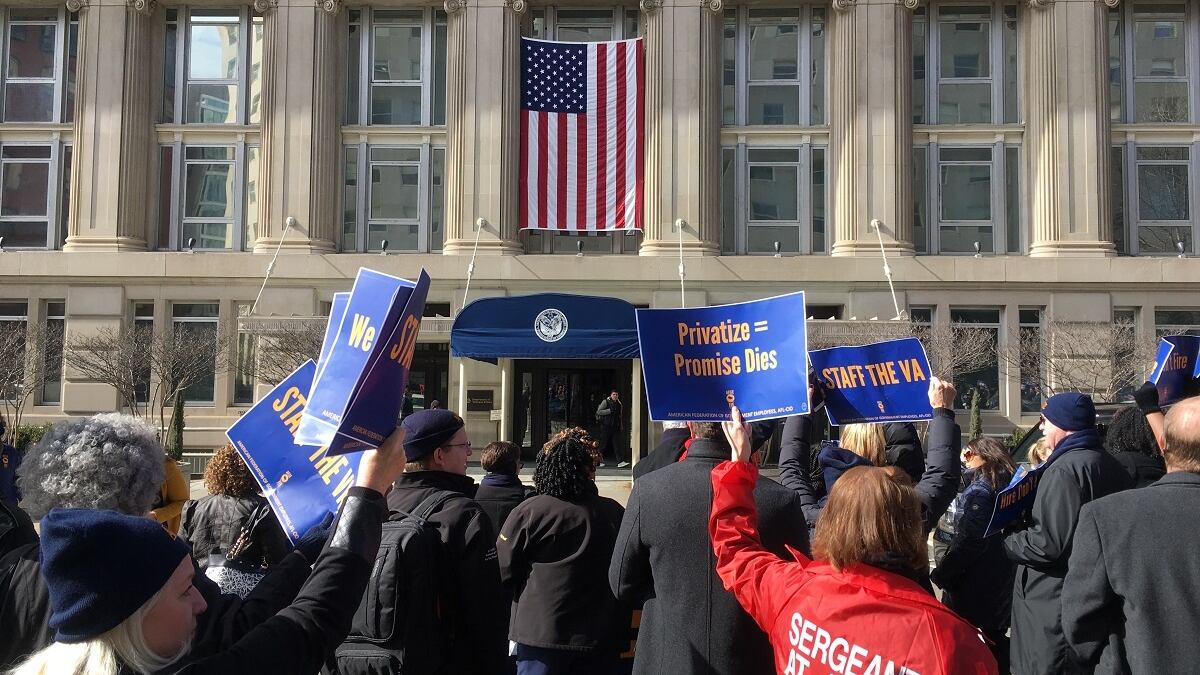
American Federation of Government Employees national president J. David Cox and Council of Prison Locals president Eric Young applauded the move in a joint statement released on Aug. 18.
"We are thrilled that the Department of Justice announced an end to the use of private prisons, and applaud the DOJ for their instruction to the Bureau of Prisons to decline or drastically reduce the use of contract incarceration as a means to an end," the pair said.
"We appreciate the deputy attorney general acknowledging that the size of the inmate population will determine how quickly we can end this practice."
Deputy Attorney General Sally Yates announced the move on Aug. 18, saying that because of reform efforts, the federal inmate population has declined enough to negate the use of privately contracted prison facilities.

"This decline in the prison population means that we can better allocate our resources to ensure that inmates are in the safest facilities and receiving the best rehabilitative services – services that increase their chances of becoming contributing members of their communities when they return from prison," Yates said in a statement.
DOJ officials noted that federal prison populations had increased by 800 percent over the last three decades—hitting a peak of 220,000 inmates in 2013—which necessitated the use of the private facilities.
As of fiscal 2014, the BOP was spending $639 million on contract prisons, which housed more than 22,000 inmates.
But in the past three years, the federal prison population has declined by 11 percent to 195,000 inmates as part of the DOJ’s prison reform initiative, Smart on Crime.

The move also benefits AFGE’s Council of Prison Locals—which represent more than 30,000 employees in the Federal Bureau of Prisons—which cited an August DOJ inspector general’s reportthat noted that contract prisons had more safety and security incidents per capita than their federal counterparts.
"The men and women working in our Federal Bureau of Prisons are the most professional, highly trained correctional workers in the nation, and are uniquely equipped to handle the heavy demands of inmate supervision, the union’s statement said.
"Returning the responsibility of caring for and rehabilitating inmates will ensure that these men and women serve their time productively, and re-enter society as reformed, valuable citizens."
Yates said on Aug. 18 that the federal government would decline to renew existing contracts and reduce its current contracts as the prison population continues to decline.