When Vice Adm. Peter Neffenger was tasked in 2015 with turning around the beleaguered Transportation Security Administration—an agency anemic in morale and abundant in criticism— he looked to an unlikely source to turn it around: former Treasury Secretary and Alcoa Inc. CEO Paul O'Neill.
When O'Neill took the reins of the manufacturing company in 1987, he emphasized worker safety to change the fortunes of the company. Before his tenure ended in 2000, O'Neill had increased Alcoa's market value by nine-fold.
Neffenger, speaking at the Wilson Center on July 13, said the O'Neill model of turning around an organization from the workers up, greatly influenced his approach as administrator of the TSA.
"During my confirmation, I met with a lot of TSA employees," he said. "I focused a lot on the front line folks at our airports. I asked them what they thought about working for TSA. I asked them what they thought I should do if I got the job.
"What I found is that they care deeply about their work. They wanted to be what they joined to be: highly professional security officials protecting the traveling public."
Neffenger said as he set out to identify where the breakdowns of screening and security problems had occurred, he equally pursued the causes of TSA's morale crash and sought to instill again a pride in the agency.
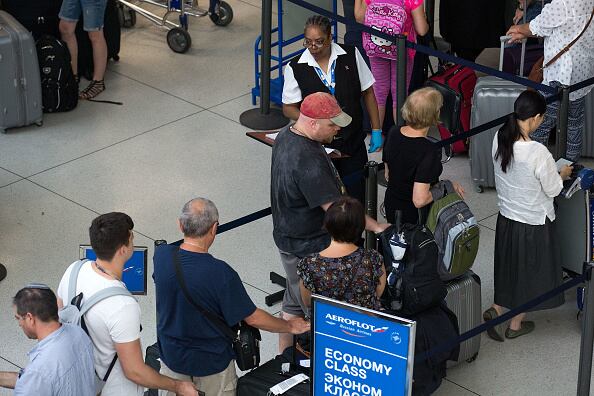
The transformation has not been without challenges, most notably this spring's rash of hours-long screening lines, which Neffenger said had been caused by a combination of higher passenger volumes and a previously planned drawdown of Transportation Security officers that was initially made to promote TSA's PreCheck program.
"From 2011-2015, we reduced our workforce by 12.5 percent, that's close to 6,000 front line officers," he said. "We did so on the hopes that we would grow our PreCheck population to a size large enough to allow us not to have so many people. That didn't happen."
Once the lines began to grow, Neffenger stopped the phase out of 1,600 positions and requested even more screeners. He also instituted a number of programs to manage passenger flow, including establishing the National Incident Command Center to manage TSA resources at the nation's largest airports.
Neffenger said the introduction of automated lanes at Atlanta's Hartsfield-Jackson Airport has shown promise. He added that thanks to partnerships with Delta and American airlines, TSA hopes to see 55 to 60 new automated lanes in airports by the end of the year.
But while passenger convenience is important, Neffenger also noted that long lines make for soft targets in the wake of the Brussels and Istanbul airport attacks. Therefore, TSA is utilizing its Innovation Taskforce to reimagine how to build an integrated security system.
"We need to think and design less in terms of checkpoints and barriers, and more in terms of a security environment in which all of these components interact," he said.
"Perimeter barriers and checkpoints serve a purpose, but they don't stand alone and they have to be integrated into a larger security environment."
The TSA Innovation Taskforce will look to build that environment through public-private partnerships, by examining new technologies and ultimately developing new strategies for how airline security is managed.
"They've already succeeded in that they are already thinking differently," Neffenger said. "So I would argue that the real value of the taskforce is not the enhancement that are going to come about. It's an example of how we are changing the way we think as a system.
"That is key, because those who would harm us are as creative and resourceful as they are ruthless."
So advancements like biometric screening and iris scanning could soon be on the horizon as opt-in models for air travelers, Neffenger said.
The TSA administrator said that the agency's evolution would be fueled by its collaboration with other federal components, but also the private sector, and he called on those stakeholders to help drive the innovation afoot.
"We have an enormous responsibility to protect our nation's transportation systems, that's not something you can do by yourself," he said. "It's really a shared responsibility. The more we share, the more transparent and open we are about the challenges, the better the results."