ALASA Right View (High Altitude Left R1) Caption: The Airborne Launch Assist Space Access (ALASA) launch vehicle is designed to lower the cost of on-demand space access. The ALASA launch vehicle would be attached under an F-15 military aircraft operating on a regular runway. Once the aircraft is airborne, the ALASA launch vehicle would drop away, fire its engines and launch small satellites into low-Earth orbit. Boeing is working with the Defense Advanced Research Projects Agency (DARPA) to produce the innovative launch vehicle and conduct flight testing. Credit: Boeing Artist’s Concept (Chuck Schroeder) 5/22/2014_RMS#265305_MSF14-0037 Series 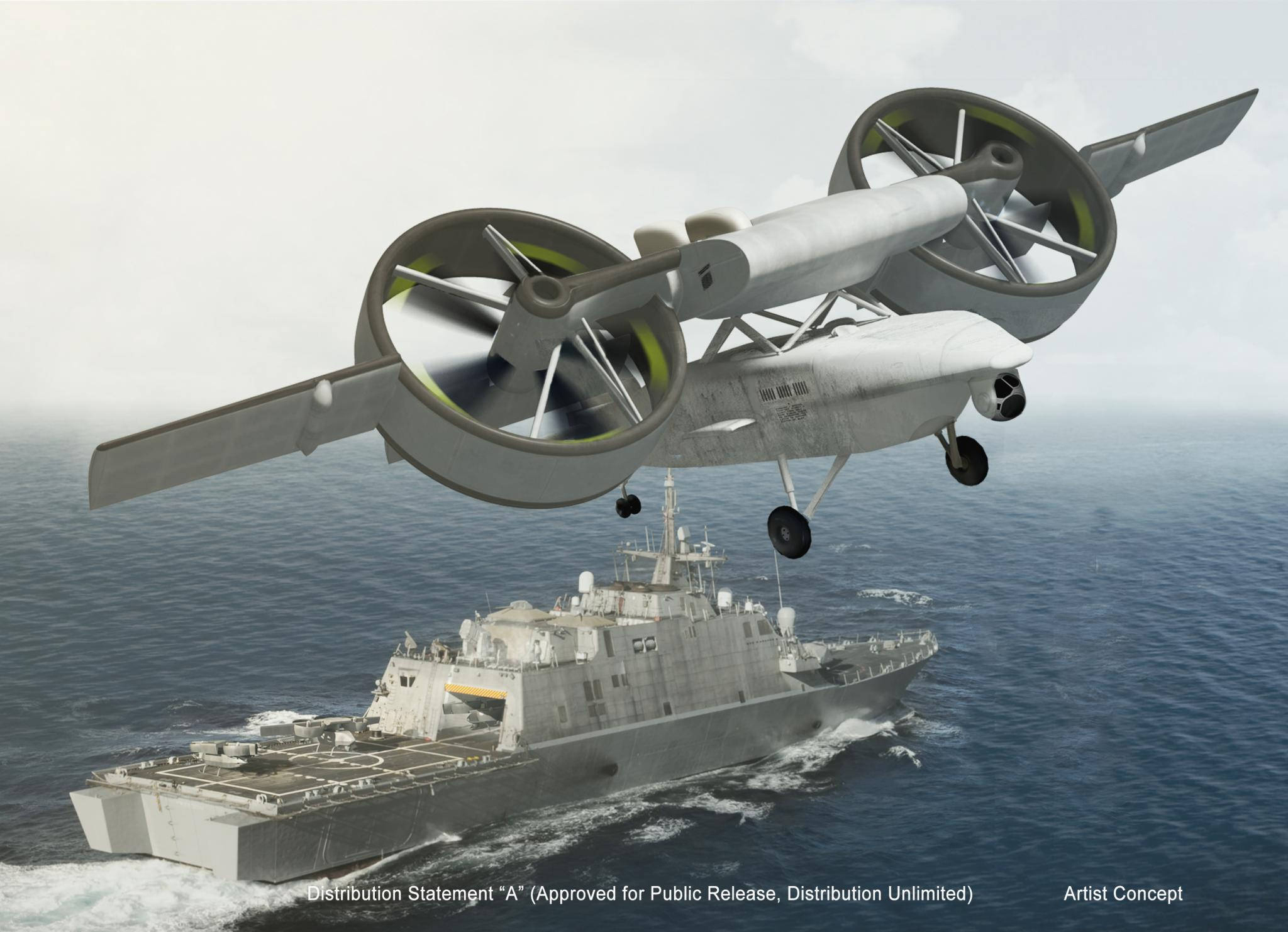
In 2013, DARPA selected Lockheed Martin’s Aerial Reconfigurable Embedded System (ARES) design concept as a promising model to provide flexible, terrain-independent transportation for logistics, personnel transport and tactical support missions for small ground units. 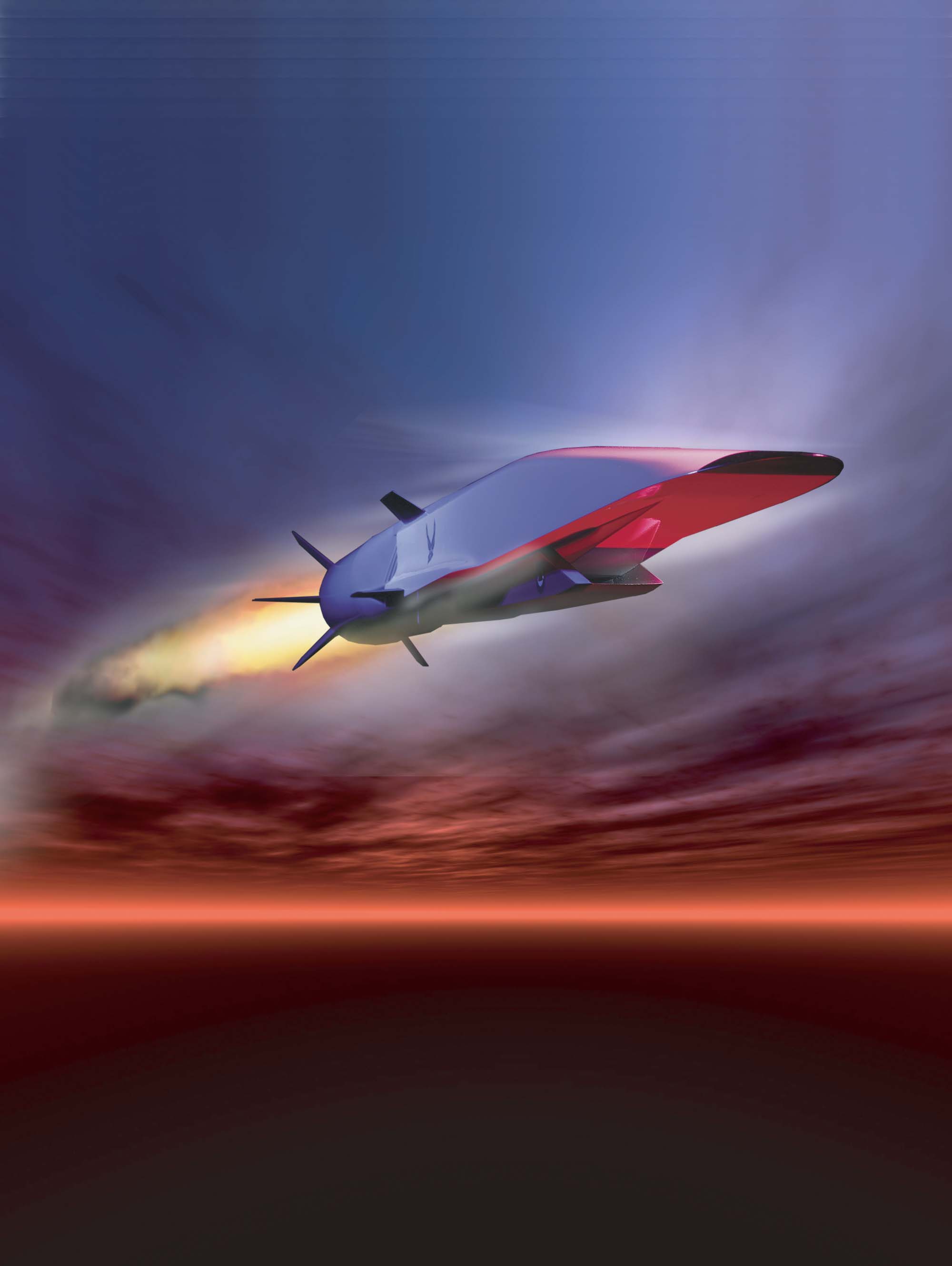
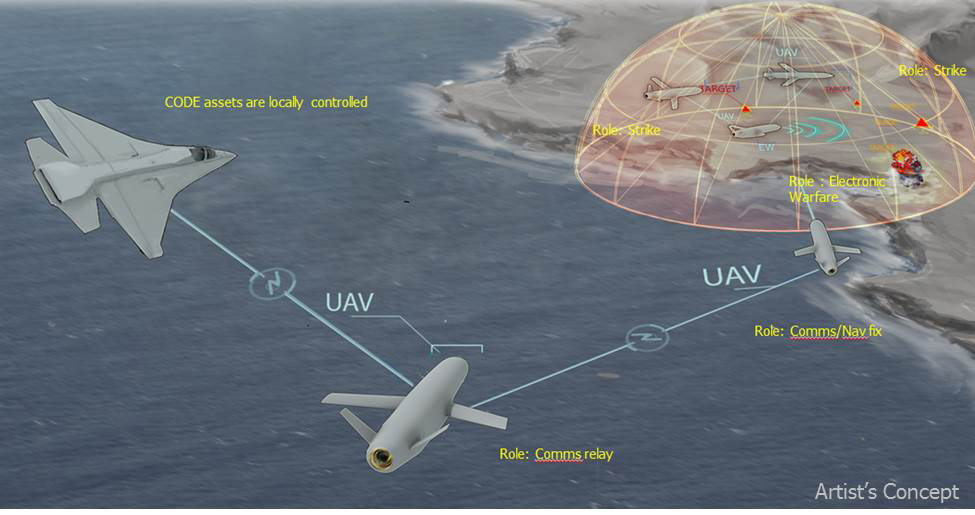
DARPAs Collaborative Operations in Denied Environment (CODE) program aims to develop algorithms and software that would extend the mission capabilities of existing unmanned aircraft systems (UAS) well beyond the current state of the art, with the goal of improving U.S. forces ability to conduct operations in denied or contested airspace. CODE would enable mixed teams of unmanned aircraft to find targets and engage them as appropriate under established rules of engagement, leverage nearby CODE-enabled systems with minimal supervision, and adapt to situations due to attrition of friendly forces or the emergence of unanticipated threatsall under the command of a single human mission supervisor. 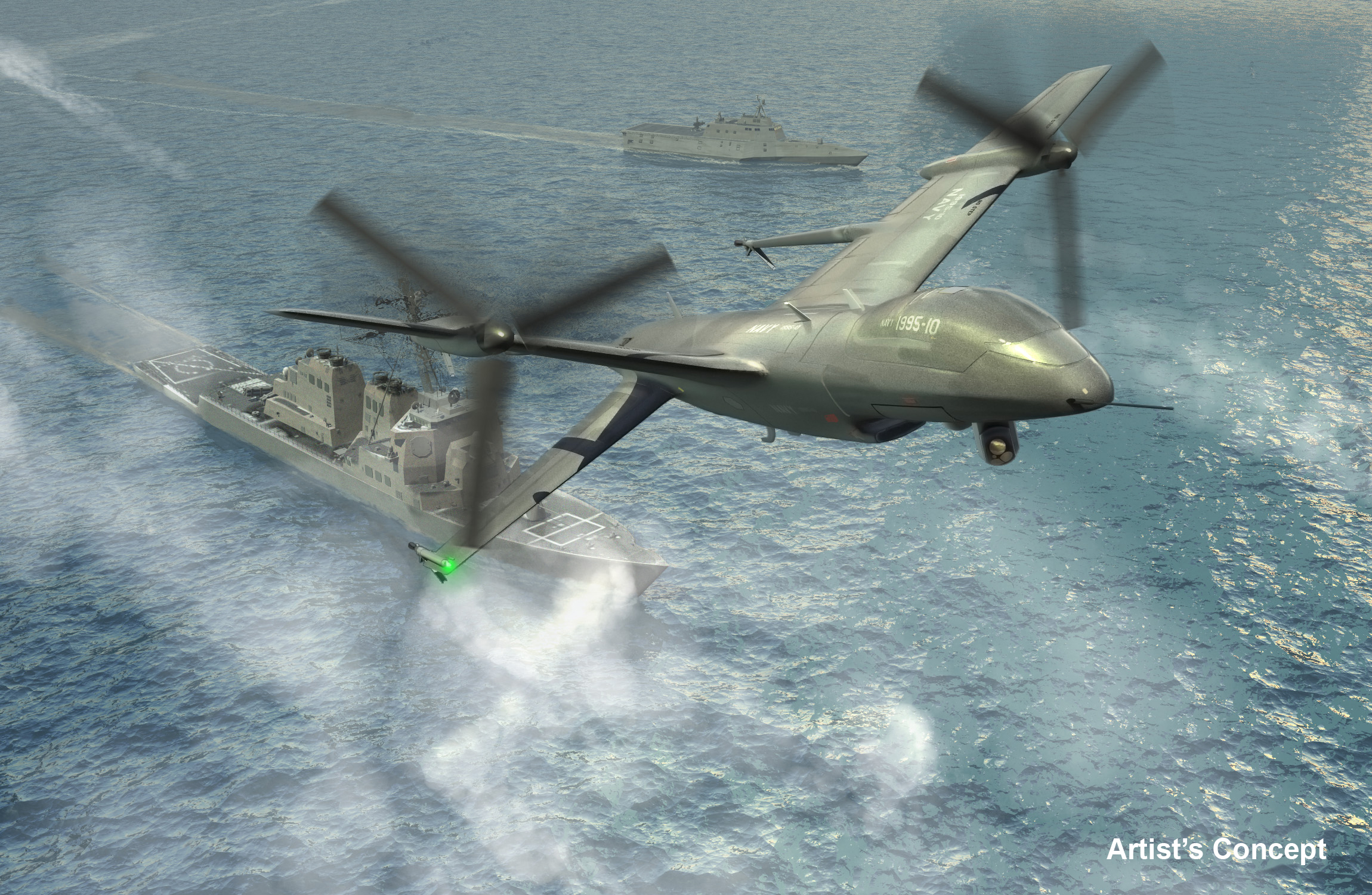
Tern, a joint program between DARPA and the U.S. Navys Office of Naval Research (ONR), seeks to enable forward-deployed small ships to serve as mobile launch and recovery sites for medium-altitude, long-endurance unmanned aerial systems (UAS). In an important step toward that goal, DARPA has awarded prime contracts for Phase 2 of Tern to two companies: AeroVironment, Inc. and Northrop Grumman Corp. 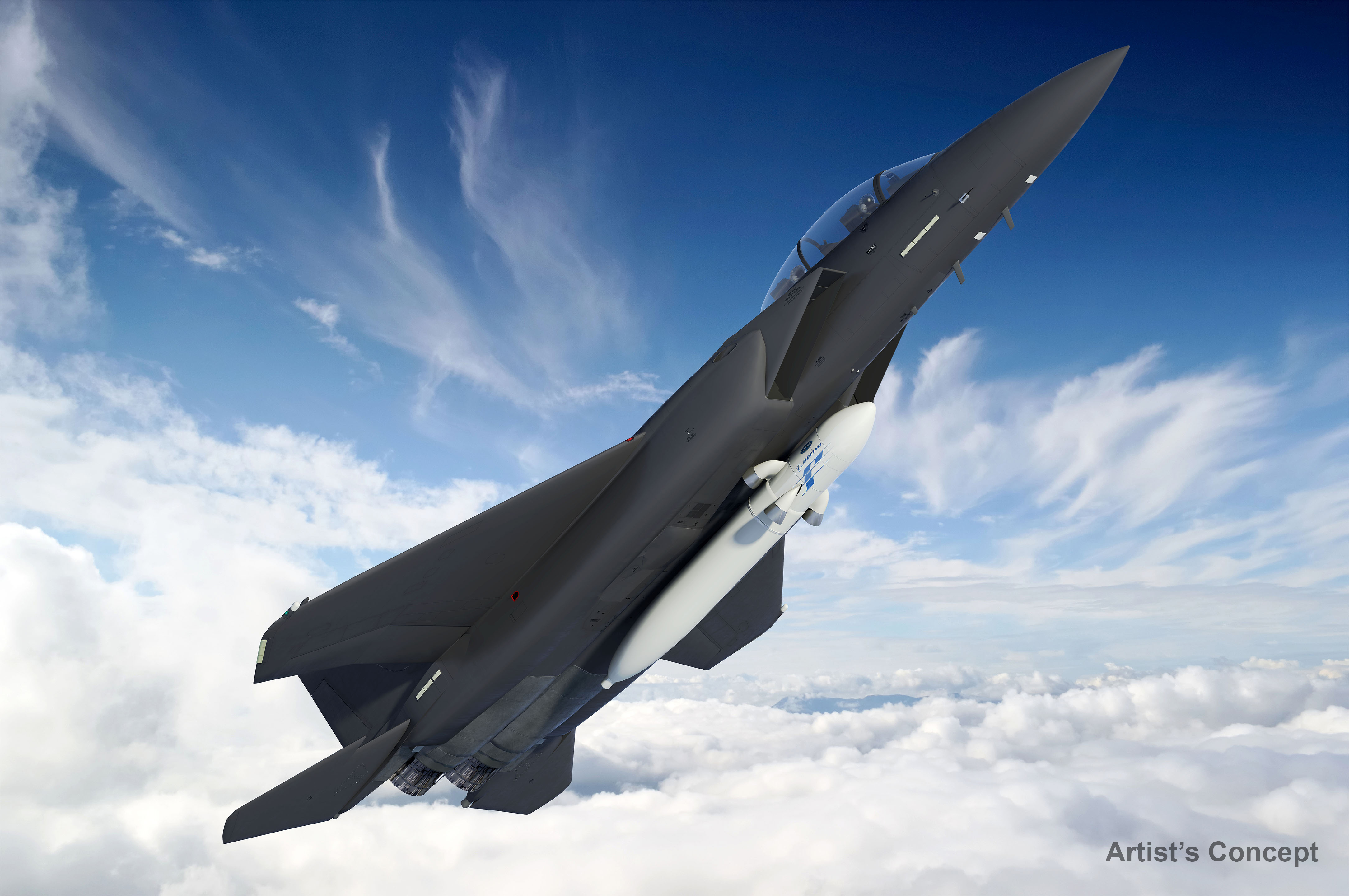
ALASA Right View (High Altitude Left R1) Caption: The Airborne Launch Assist Space Access (ALASA) launch vehicle is designed to lower the cost of on-demand space access. The ALASA launch vehicle would be attached under an F-15 military aircraft operating on a regular runway. Once the aircraft is airborne, the ALASA launch vehicle would drop away, fire its engines and launch small satellites into low-Earth orbit. Boeing is working with the Defense Advanced Research Projects Agency (DARPA) to produce the innovative launch vehicle and conduct flight testing. Credit: Boeing Artist’s Concept (Chuck Schroeder) 5/22/2014_RMS#265305_MSF14-0037 Series 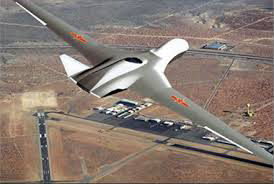
A Chinese New Concept UAV, which could be used against terrorists. 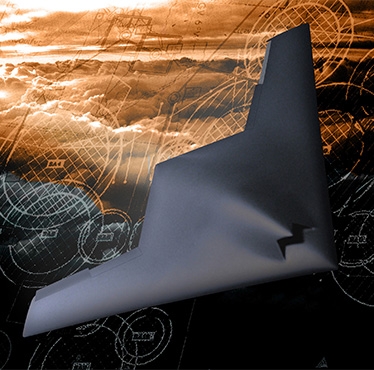

Future Visions: A peek at technologies that might soon be real
Share:
- Share on Facebook (Opens in new window)Facebook
- Share on X (Opens in new window)X
- Share on Bluesky (Opens in new window)Bluesky
- Share on Reddit (Opens in new window)Reddit
- Share on LinkedIn (Opens in new window)LinkedIn
- Share using Native toolsShareCopied to clipboard
- Share on Mail (Opens in new window)Mail