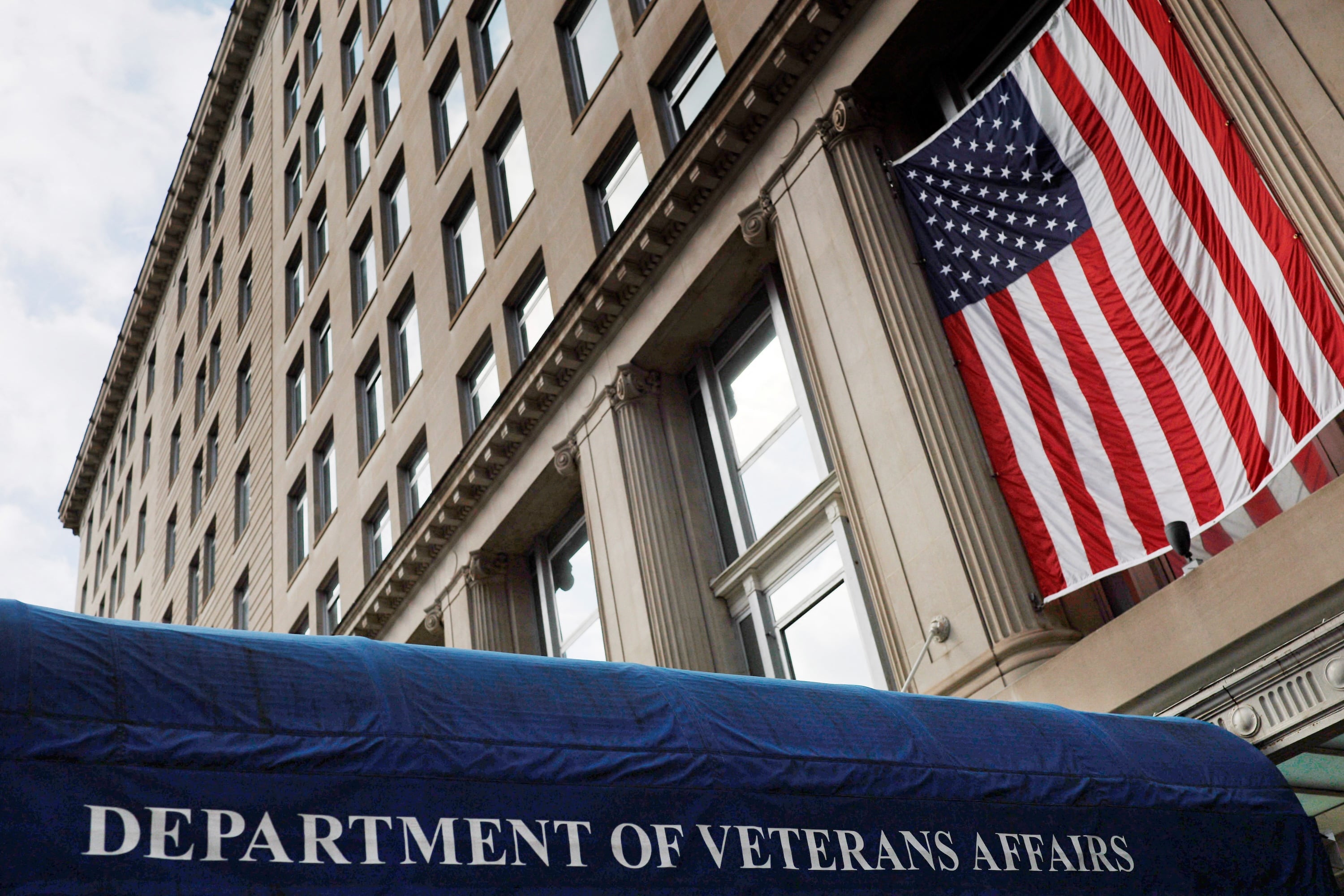
The Department of Veterans Affairs would see its budget increase by 7.7% in fiscal 2027 under the White House’s proposed $2.2 trillion budget for the federal government.
According to budget documents released this week by the Trump administration, the VA would receive a record $488 billion, including $205.6 billion in discretionary funding for programs and operations and $282.6 billion for mandatory spending — the column that covers disability benefits, pensions, insurance and other requirements.
Highlights in the discretionary spending proposal include $500 million to build permanent facilities for homeless veterans at the new National Center for Warrior Independence in West Los Angeles, $1.3 billion to construct a VA medical center in Manchester, New Hampshire, nearly $2 billion to replace the VA medical center in Indianapolis and $30 million to buy land for a new medical center in San Antonio.
The budget supports the VA’s proposed redesign of its community care contracts and programs and planned changes to the management structure at the Veterans Health Administration. It also funds the restart of the VA’s electronic medical record system program that has been on hold since 2022. The VA plans to restart the initiative this month at four facilities, with an additional nine joining later this year.
The VA estimates that the fiscal 2027 budget would provide disability compensation to more than 7.4 million veterans and support 9.2 million veterans enrolled in VA health care.
According to the VA’s Budget in Brief documents, the proposal would support 443,327 full-time VA employees — roughly 9,000 fewer than in 2025 but up nearly 6,200 from fiscal 2026.
In a statement laid out in the documents, VA Secretary Doug Collins said the proposal will enable the department to deliver timely care and benefits for all beneficiaries.
“This budget request reflects VA’s efforts to find more effective and efficient ways to serve our mission and maximize our resources,” the document states. “The days of measuring VA’s progress by how much money we spend and how many people we employ, instead of how successfully we serve Veterans, are over.”
President Donald Trump’s $2.2 trillion budget proposal for fiscal 2027 includes nearly $1.5 trillion in spending for the Defense Department — up 44% from fiscal 2026 levels — and increases for the Departments of Justice and Homeland Security.
It trims several domestic programs, including education, food and energy assistance, housing, the National Institutes of Health and Centers for Disease Control and Prevention, among others.
The proposed VA budget increases spending for VA medical care provided in VA facilities but also increases the budget for community care, the VA’s program for covering the health treatment received by veterans in non-VA facilities.
The budget, which also includes a request for advanced funding for fiscal 2028, ensures that veterans benefits and services are never affected by a government shutdown. In addition, it increases medical care funding, with $96.2 billion requested for care provided in the VA medical system and $42 billion for community care.
As with fiscal 2026, VA officials asked to shift the mandatory funds designated to cover the costs associated with injuries or illnesses related to toxic exposures to the discretionary budget. The request of $52 billion from the Cost of War Toxic Exposures Fund is likely to raise concerns among Democratic lawmakers, who have argued that the continued use of the funds could jeopardize monies set aside for a specific purpose.
The proposal also seeks to cut what White House officials referred to as “divisive and wasteful diversity, equity and inclusion initiatives.” The budget documents did not specify which diversity programs the budget will defund, but officials said the reductions would ensure that “VA funding is used for critical VA missions: providing healthcare; benefits; and cemetery services for America’s veterans.”
The president’s proposed budget represents Trump’s vision for the federal government. It serves as a blueprint for Congress to consider as it starts its fiscal 2027 appropriations process.
In the last 25 years, the VA’s budget has ballooned significantly to address the needs of older veterans as well as the millions who served in Iraq, Afghanistan and elsewhere following the Sept. 11, 2001, terrorist attacks. Trump’s fiscal 2027 budget proposal represents a 10-fold increase for the VA since fiscal 2001, when the VA’s budget was $45 billion.
Patricia Kime is a senior writer covering military and veterans health care, medicine and personnel issues.